Love and Empathy
July 30, 2026
4
min
read
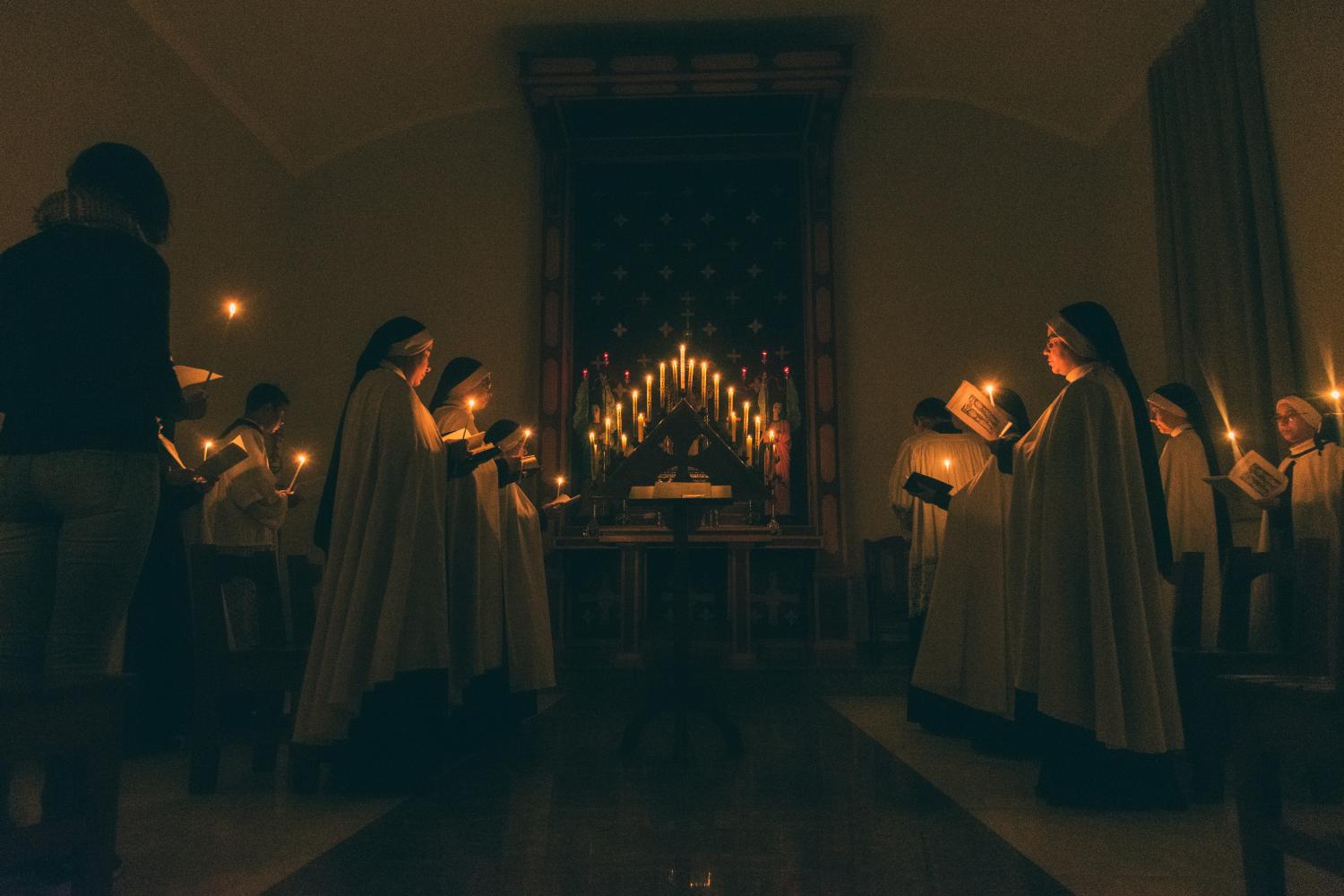
“These women are practicing empathy in the extreme.”
That’s what this New York Times piece has to say about one community of nuns, who rise in the middle of the night to pray for mothers, also awake in the middle of the night. The author visited them after their community had gone viral, with new mothers moved that these women would “get up each night to feel their pain.”
The sisters, though, speak of their practice a bit differently. “We are spiritual mothers, accompanying people in their darker hours,” one nun said. That accompaniment, they say, is a work of “true love.”
“Love” versus “empathy.” It’s maybe no surprise that the New York Times would favor “empathy” as the word to characterize this work of the sisters. That word has been highly politicized in recent years, with some hailing it as the virtue among virtues, and others decrying it as exactly what’s wrong with the world – too much feeling, not enough doing. But the juxtaposition of these terms does raise a good question, particularly for Christians: namely, is empathy an exercise of charity? Is it love? And should Christians concern themselves with being empathetic?
It’s worth trying to identify, first, what empathy actually is. Most would agree that it’s primarily an emotive experience; it is to feel the pain of another as if it’s in some way one’s own. But just here we can lose sight of the relative value of those feelings if we don’t have a clear anthropology. It’s true that our emotions are an integral part of being human, but they are part of what the tradition calls our “lower nature” – the part of us that we share with irrational animals, and which is not aways under our simple control. When rightly cultivated, our emotions can support and enrich what our minds and wills perceive to be good and true. But they’re not the noblest part of us, nor the most authoritative. Indeed they can often be misleading, distracting, and disordering.
We don’t really like talking about emotions like that, though. We tend to think of our emotions as representative of who and what we are. This is largely because we live downstream from the Romantic movement, which, among other things, asserted that our emotional experience is the sign of authenticity and reality. It asserted that we are what we feel, and that our emotions are revelatory of the truth.
On a Christian anthropology, this is not true. For Christians, we are what we actively will. God himself points us in this direction, in that he never commands our emotions. All of Jesus’s commands are oriented to the will, and are based in the truth of things, independently of how we may feel about them.
Thus charity, which Christ does command of us, is also an action of the will. Empathy, however, is not. Being based in the emotions, it isn’t a virtue in the way that love is: we can’t command our emotions enough for it to be so; we can’t simply summon up certain feelings. And sure, it can be virtuous to cultivate empathy as a way of supporting an action for what is good and true. But that’s not what makes the action virtuous.
It would seem, then, that the sisters’ work – as an expression of “true love” – is a work of their minds and their wills. It doesn’t appear that they are doing what they’re doing because of an overriding empathetic emotional impulse – “empathy in the extreme.” Indeed when the New York Times writer spoke with them about the politics of empathy, “they seemed genuinely puzzled,” she wrote. The sisters probably don’t feel much for the people they are praying for, night after night after night; they probably don’t feel much of anything at that hour. But that doesn’t negate the potency or the authenticity of their prayer: they know these people are in need, and they wish good for them, so they pray for them. Empathy – even if it can support charity – is mostly beside the point.
Nonetheless, it is an interesting symptom of our age that a controversy is swirling over an emotive response, rather than about what is objectively good, just, and true. But in a time when we have insisted that there is no overarching truth and that goodness is personally and subjectively determined, we don’t really have anywhere else to go. The culture the New York Times writer is working in doesn’t have the language for charity – that sharp and clear choice for another, regardless of what one is feeling. To disregard feelings in that way is antithetical to contemporary culture, and so how could she. Fortunately for us, though, we are not fettered by our emotions; we’re instead promised true freedom: the freedom to love, and to choose love, in every circumstance.