Unity in Truth
June 25, 2026
4
min
read
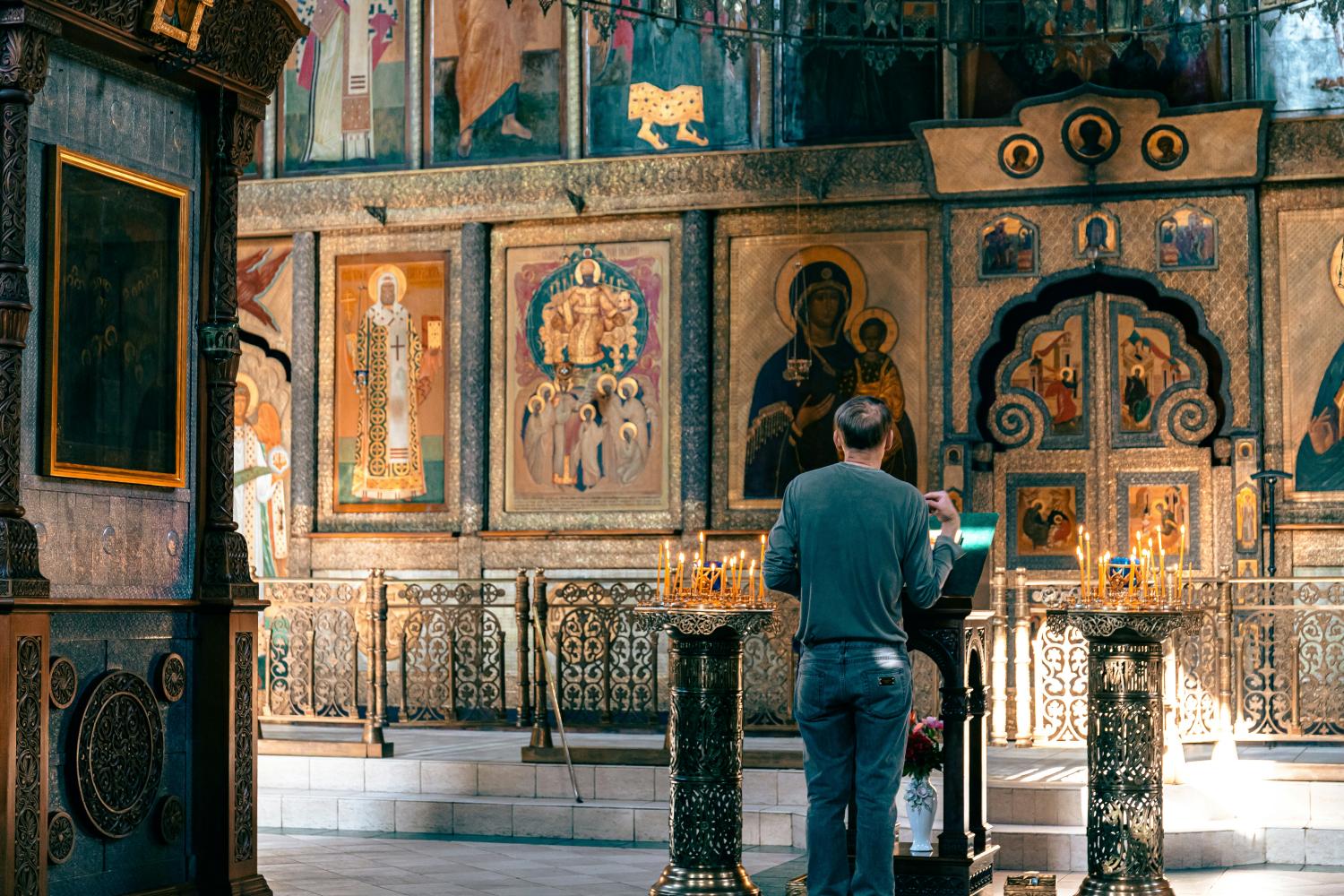
In a recent address, Pope Leo highlighted what a great gift the Eastern Churches are, noting that they offer Catholics a rich, and important, diversity. “Yes, the Eastern Catholic Churches have a great gift to offer the entire Catholic community,” he said, “which is often unaware of the diverse ecclesial traditions within its ranks.” But, he went on, “the Christian East can only be preserved if it is understood.”
So how are we to understand it? It’s noteworthy that the Holy Father speaks specifically of “ecclesial traditions,” as distinct from the Apostolic Tradition. The Apostolic Tradition is what we refer to when we think of the Deposit of Faith – it is the substance of divine revelation itself, those truths and doctrines a Christian is obliged to believe. Ecclesial traditions are expressions of that revelation in the clothing of a culture and time. They are the specific incarnations of the truth as it plays out in human life and custom, and so by their nature such traditions are not perennial nor binding. They change as human cultures change, as the patterns of human living and thinking grow or develop.
How these two kinds of tradition interact, though, is where we can get things a bit jumbled. The task at hand could be summed up this way: we’re needing to value both the essential importance of the truth, as contained in the Apostolic Tradition, and at the same time to maintain the “unity of the spirit in the bond of peace.” We should pursue unity and avoid division, in other words, but at the same time that unity needs to be founded on the truth of the Gospel and the ongoing magisterial teaching. We’re looking for that golden mean, and it can be lost in either of two directions.
On one side is the so-called “ecumenism of unbelief.” This attitude sees unity as the all-important value, to be pursued at almost any cost. This is the kind of thing that has been floating around for the better part of a century. Whether among various liberal Christians, or in Christians seeking unity between the “religions of the world,” it sacrifices the truth to unity. And the result is that one gets (and has gotten) neither. Truth, of course, ends up going by the wayside, but unity, too, turns out to be built on very fragile and abstract terms that don’t bear much weight – it’s the pursuit of little more than unity for unity’s sake, and that’s not enough to establish genuine communion in the things that really matter.
But on the other side are those Christians who are too ready to seek to divide themselves from other Christians for the cause of “truth,” as they may determine it needs protecting amidst the sea of differing ecclesial traditions. In this, one risks drawing lines where Christ and the Holy Spirit have not drawn them, and proclaiming absolutes where God has not. And this is the schismatic temptation. For Eastern and Western Christianity, ecclesial practices have loomed large as a point of misunderstanding and division in this respect. There are those traditions which have remained in communion with Rome, recognizing their customs and practices as just one expression of the Truth, and there are those who have erred in just this way, taking the schismatic road in declaring their tradition the definitive one.
So, Pope Leo’s summons toward “delving deeper” into the spiritual riches of Eastern Christianity is a good one to heed - as, he says, “we [also] look forward to progress toward full unity with all the Eastern Churches.” This is the approach of the genuinely “traditional” Catholic, the person who is attempting to think with the Church as "the pillar and ground of truth." Indeed the Holy Father’s call is a call to honor both of these two values: to have an absolute commitment to the truth as it is found in Jesus, and to do everything possible to maintain the bond of unity such that the Church may be one. It is a lot easier to take one of the wrong paths. Either, after all, would be so much simpler. But the fruitful life and growth of the Church has always chosen the difficult task of holding these two aspects of the faith together, attempting to integrate them as well as we can, no matter how difficult it may be in certain circumstances.