The Church Beyond the West
April 30, 2026
3
min
read
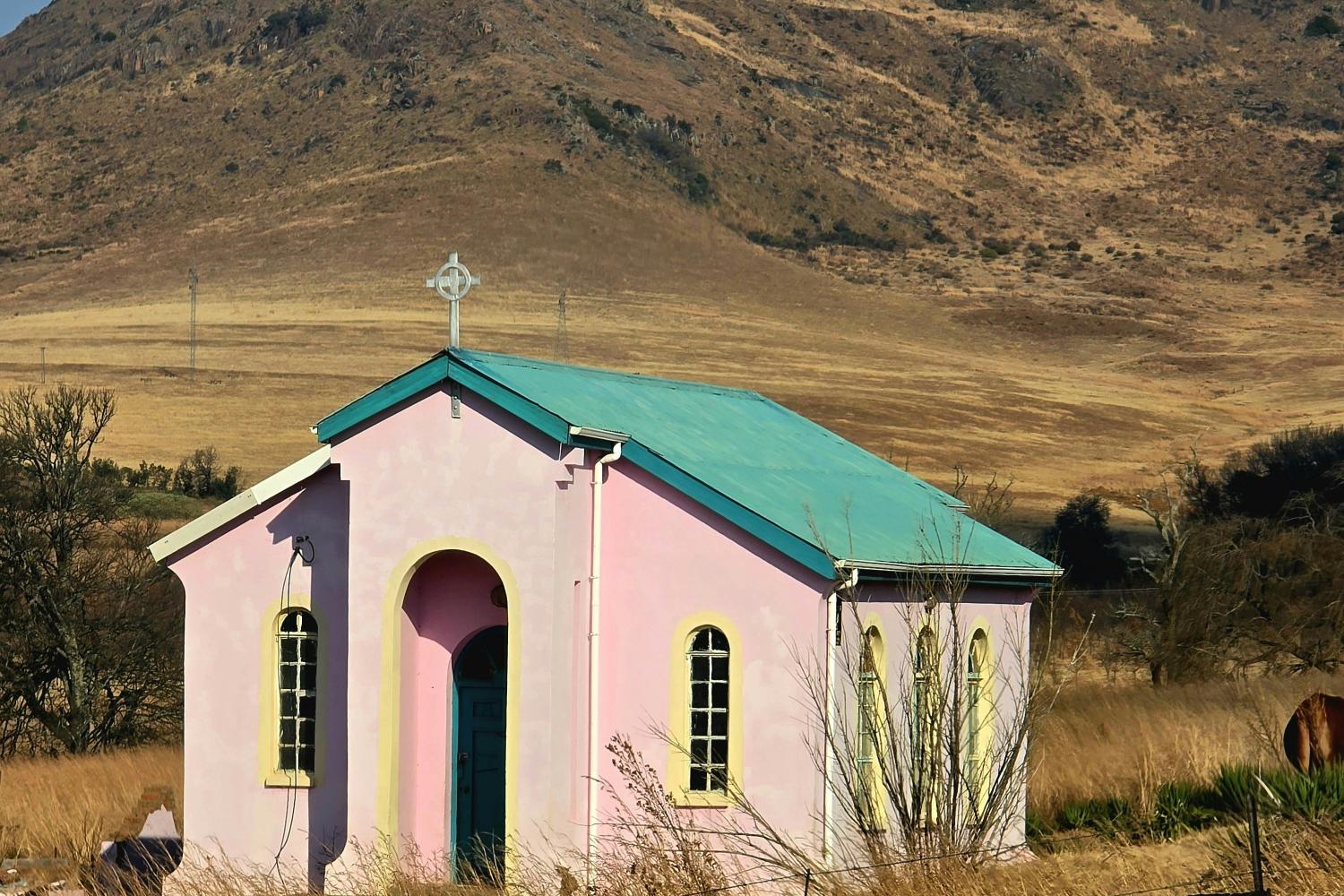
Since Pope Paul VI became the first reigning pope to visit Africa in 1969, popes have made dozens of visits to the continent. This ongoing papal attention mirrors the staggering growth of Christianity on that continent.
Drawing from sources like Pew Research and the World Christian Database, a clear picture can be painted. In 1900, there were approximately seven million Christians living in Africa, comprising around 9% of the continent’s population. Today, there are a projected 780 million African Christians, comprising almost 50% of the continent’s population. Catholicism in particular has grown from roughly 2 million adherents in 1900 to nearly 280 million in the present day, accounting for 20% of the world’s 1.4 billion Catholics. This expansion reflects both demographic realities (e.g., Africa has the highest fertility rates in the world) and sustained evangelistic activity.
Numbers like this can be revealing to the modern Western mind, which has tended to view Christianity as something of a Western, perhaps even Caucasian religion; of course, both history and modernity run counter to this presupposition. Historically speaking, the early Church was overwhelmingly Eastern Mediterranean and Greek, with powerful sees in Alexandria and Antioch (in addition to Rome, which benefitted from being the imperial capital). In fact, the first millennium of Christianity was more Eastern than Western. In the modern day, it would also be inaccurate to conceive of Christianity as something Western, as a far greater part of the Catholic Church, for instance, is to be found in Latin America, Africa, and Asia than in North America and Europe. In a word, the “average” Roman Catholic is neither ethnically nor geographically Western.
This is an important corrective. The unspoken assumption that “as goes the West, so goes the Church” is untenable. While the West grows more secular, for instance, Christianity continues to grow worldwide. What this demographic shift will mean for the future has yet to be seen, yet the scale alone indicates it will be significant.
With this in mind, it may be beneficial to consider several general features of the African Church today (with a special view to Catholicism), which impact a substantial portion of the global church.
First, just as Christianity has seen massive growth on the continent, so has Islam. In areas in which both populations border or overlap, tensions have tended to rise. An area of particular concern is the Sahel, an ecological strip that cuts across the continent from east to west, which has come to form something of a boundary line between the Muslim-heavy north and the Christian-heavy south. Notably, tens of thousands of Nigerian Christians are believed to have been martyred since 2009.
Second, perhaps owing to the relatively recent spread of Christianity through many regions, African Christians tend to articulate a strong sense that Christianity is a liberating religion, setting us free from spiritual forces. This emphasis can stand in contrast to common Western perceptions, which tend to see Christianity as a limiting factor due to the moral constraints it places on disciples.
Third, ideological divisions that sometimes characterize Western Christianity – particularly between an emphasis on doctrine and liturgy on the one hand and social justice on the other – are less pronounced in African contexts. In many parts of Africa, the realities of poverty, political instability, and communal life have tended to draw these concerns together rather than separate them.