Freedom to Know Truth
September 24, 2026
5
min
read
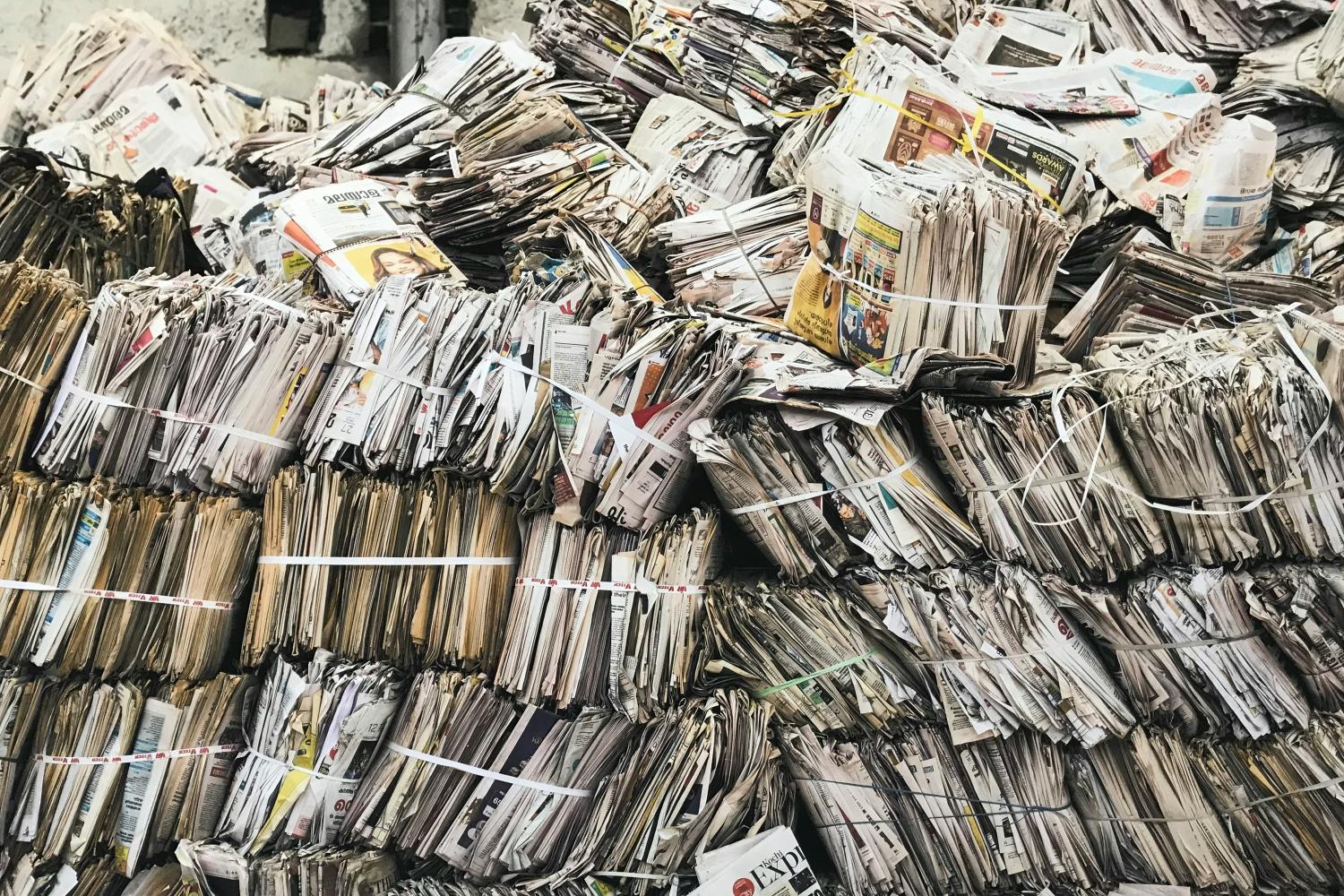
The White House made waves in the media this week when the president revoked three news organizations’ access to the White House Briefing Room, justifying the decision by claiming that the media outlets had been publishing fake news. The outlets fired back with their own rejoinder: the more accurate story, they said, was that Trump just didn’t like their news.
The three organizations – CNN, POLITICO, and MS NOW – have since filed a joint lawsuit, arguing that Trump’s decision was an assault on free press. “This ban … harms the American people,” their attorney said, “who are entitled to rigorous, fact-based coverage of the President of the United States.” The public deserves public independent journalism, they went on to say, “free from government interference.”
The claim reflects a fairly common assumption, applicable in ways that go beyond just this snafu and even beyond the First Amendment: namely, the assumption that freedom of expression will mean more diversity of expression, which will eliminate bias in the way information is conveyed. This – the assumption goes – will allow people to make freer decisions about what they think, limiting the “influence” any one government, institution, creed, or person can have on someone. Free expression, then, is necessary for free thought – about politics or religion or morals or whatever.
But, we might wonder… is that true? A few months ago, The Public Discourse published this piece, questioning, in a related vein, whether “academic freedom” really is the thing it’s all cracked up to be: the guardian for free inquiry; the protector for “rigorous, fact-based” thought. Perhaps, the piece wondered, the “freedom” we so cherish in all these different arenas of American life isn’t really the kind that makes us, well, free.
The piece notes that in university settings, the assumption there, too, is that freedom of expression results in a kind of neutral zone, where no belief system is allowed an edge in the “free exchange of ideas.” The ideal university, then, is one where all points of view are welcome at the table, with equal weight: all of them join in on the conversation, with no one of them receiving institutional priority.
There are a few problems with this, though. The first is that it’s self-deceiving. There are certain kinds of views that such a philosophy inevitably does try to keep out: those it perceives as intolerant, for instance, or those it thinks of as hostile to the agenda that tends to run underneath it – freeing oppressed voices from their oppressors. If those views are kept out of the conversation, then there is a kind of institutional priority already being given to others, even if they claim otherwise. But a second problem is that this preoccupation with academic freedom lets go of truth as being the goal of inquiry at all. If every view has to maintain a place at the table, then certain conclusions, if they risk disproving or devaluing a certain view, become prohibited, even if one’s reason would otherwise lead one to them.
This, ironically enough, thus turns out to be an encumbrance on our freedom: “An intellect that cannot affirm anything as true is not brave,” the Public Discourse piece argues, “it is trapped in endless suspicion. … The biblical claim that the truth will set you free therefore has an intellectual meaning as well as a moral one. Falsehood is a kind of captivity. The closer you come to truth, the freer you are.”
By contrast, the influence of a tradition – the thing proponents of free expression are so wary of – becomes the actual means to giving oneself to what one wants to claim as true. It’s a bit like training someone to be a great football player or gymnast. One doesn’t say to that person, “Make whatever moves you want, and we’ll accommodate them into our sport. We’ll call whatever it is you do football; we’ll call whatever you do gymnastics.” One offers the person the tradition, and molds his or her skills according to it. And then, having mastered that tradition, that person is free to play their sport.
Education, then, also becomes most freeing when viewed as an initiation into a tradition. Tradition gives to us reliable habits of thought which we can mold our mind according to, as well as first principles we can work from. And we need those – our minds are analogous to that young child approaching football for the first time, needing direction in how to play; we, too, need direction in how to think. And it’s not that the principles we’re then given are meant to be regarded as exempt from scrutiny. Rather, they’re meant to invite scrutiny, such that one can consider them as indeed worth committing one’s mind to or not. But once chosen, that tradition allows one to actually make deliberate and clear-eyed decisions about what one thinks and how one acts, because one has chosen a worldview. One hasn’t just pledged oneself to a perpetual state of hearing, with an entirely open and perfectly “tolerant” mind, one opinion after another after another.
…All of which is not to say that we should cast to the wayside free speech and free press and academic freedom. All of that has its place, insofar as it allows someone who has committed themselves to a given set of truths to live and think and speak according to them. But we need to be clear about what those principles are valuable for – and it’s not to be the sure guard against being unduly influenced by one perspective or another. Nor should we want it to be. Being influenced by and swept off our feet into a tradition of thought that’s proven itself worthy of trust is to find ourselves free, at last, to navigate the competing views our world throws at us. It’s to find ourselves free to recognize the biased perspective of even the most rigorous, fact-based newscasting. And it’s to find ourselves free, at last, to truly come to know the truth – that which our minds really are made for.